A PERSONAL SPACE FOR RESEARCH & CURIOSITY
NEW YORK

STATISTICS / GRAPH LEARNING / TIME SERIES

Yihan
Wu.吴屹瀚ALSO KNOWN AS CARACALLA

Structure, signals,
and everything between.

I’m a master’s student in Statistics at Columbia University, interested in how graph structure and temporal dynamics can help us learn from complex data.

THE SHAPE OF CONNECTION
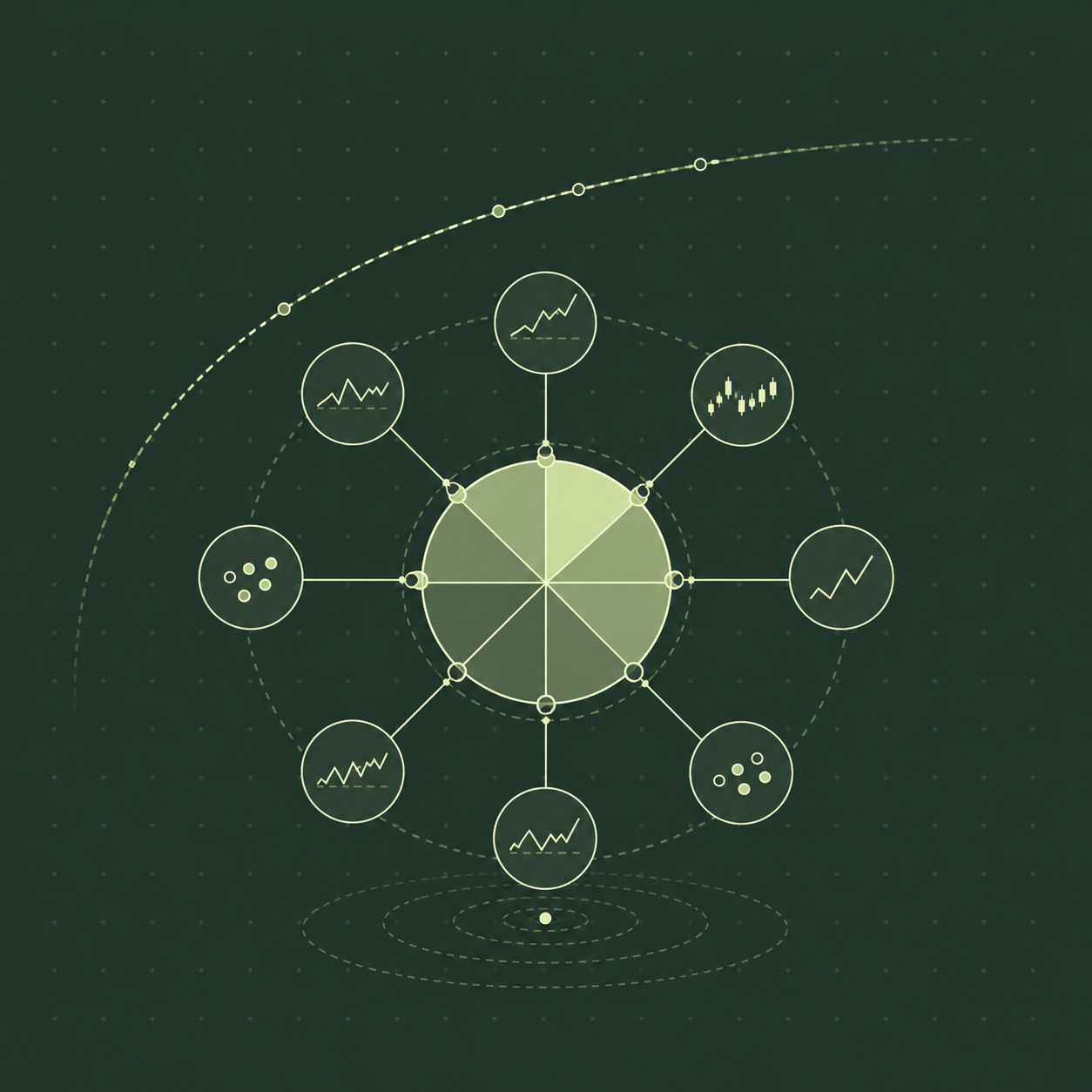
A graph connects nodes with edges; a hierarchy organizes nodes into levels. Synthetic time series illustrate how node signals change over time.
synthetic signal x(t)
FIG. 01 Patterns emerge through connection.
INTERACTIVE STUDY · SYNTHETIC DATA
Move to rotate. Click a node to follow its signal.
01
Currently
MA in Statistics · Columbia
New York, United States
02
Selected work
Hierarchical time series · KDD ’26
Structure-aware abstraction
03
Looking ahead
Graph-structured & temporal AI
Learning, understanding, exploring

A little structure.
A bigger picture.

2024 — 2026

Publications, accepted articles, and manuscripts in progress.

Peer-reviewed publications & accepted articles

04
Published
KDD ’26/RESEARCH TRACK/CO-FIRST AUTHOR

Structure-Aware Abstraction of Hierarchical Time Series

Yihan Wu*, Xuliang Zhu*, Guozhong Li, Kai Wang, Xuemin Lin

*Equal contribution.

How can we summarize time series without losing the hierarchy that connects them? This work studies structure-aware abstraction, selecting representative subgraphs that balance temporal similarity and node values. The open-source artifact includes V-Greedy, P-Greedy, and OSS.

Time-series abstractionHierarchical dataGraph algorithms

KDD 2026 · pp. 5500–5511 · DOI: 10.1145/3770855.3817713The diagram is a conceptual illustration, not an experimental result.
Accepted / in press
FRONTIERS IN CARDIOVASCULAR MEDICINE/2026

Baseline SII and SIRI Identify Immune-Inflammatory Susceptibility and Improve Risk Stratification of Early Subclinical Cardiac Dysfunction during Non-Steroidal Aromatase Inhibitor Therapy

Cenyu Li, Zhengyu Tao, Yihan Wu, Chen Wu, Zi Wang, Xiaoning Wang, Huijuan Dai, Meng Jiang, Jun Pu

This accepted study examines whether baseline systemic immune-inflammation measures can help identify susceptibility and improve risk stratification for early subclinical cardiac dysfunction during non-steroidal aromatase inhibitor therapy.

Immune-inflammationCardiac dysfunctionRisk stratification
Frontiers in Cardiovascular Medicine · 2026 · DOI: 10.3389/fcvm.2026.1888328The diagram is a conceptual illustration, not an experimental result.
Published
OPEN JOURNAL OF BUSINESS AND MANAGEMENT/2025/SOLE AUTHOR

Portfolios, Stock Market Indices and Investment Strategies

Yihan Wu

This article studies how portfolio construction, stock-market indices, and investment strategies interact, framing diversification and allocation choices through risk and return.

Portfolio constructionMarket indicesInvestment strategy
Open Journal of Business and Management · 13(3): 2099–2119 · 2025The diagram is a conceptual illustration, not real market data.
042024
NeurIPS 2024Published

Lambda: Learning Matchable Prior for Entity Alignment with Unlabeled Dangling Cases

Hang Yin, Liyao Xiang, Dong Ding, Yuheng He, Yihan Wu, Pengzhi Chu, Xinbing Wang, Chenghu Zhou

Advances in Neural Information Processing Systems 37 · pp. 78964–78995 · 2024

Manuscripts under review

03

The works below are under review, not accepted publications. Submission venues are shown separately from publication venues.

052026
Manuscript under reviewUnder review

BTSplit: Boundary-Tracking Split for Constraint-Aware Maximum Common Induced Subgraph

Yihan Wu, Zitao Xing, Yixiang Qian, Xuliang Zhu, Kai Wang, Xuemin Lin

2026 manuscript

062026
Submitted to KDD 2027Under review

From Forecasting to Classification: Selective Knowledge Transfer with TSFMs

Guozhong Li, Yihan Wu, Rundong Zuo, Xuliang Zhu

2026 manuscript

072026
Submitted to Transactions on Machine Learning Research (TMLR)Under review

Where a New Concept Must Enter: Entry Point Gates Cross-Task Usability in Unified Multimodal Models

Zongyang Qiu, Yihan Wu, Kaixuan Fan, Bo Li, Hui Xiong

2026 manuscript

Following the connections.

I / STRUCTURE

Graph learning

Learning with relational structure, with a particular interest in graph neural networks, meaningful representations, and understanding what a model has learned.

II / DYNAMICS

Time-series intelligence

Finding useful abstractions of temporal data, especially when individual signals are connected through a hierarchy or a graph rather than existing in isolation.

III / INTERACTION

Spatiotemporal modeling

Exploring how relationships and signals evolve together, and how statistical learning can connect local interactions with the behavior of a larger system.

These are directions I’m interested in exploring, not a list of completed projects.

Always a
student.

From Shanghai to New York, I’m building a research path at the intersection of statistics and AI. I like questions that connect a clean mathematical idea to a complex, real-world structure.

SHANGHAI → NEW YORKDifferent places. The same curiosity.
2026 —
PRESENT

Columbia University

New York, USA

Master of Arts in Statistics

Graduate study in statistics, alongside research interests in graph learning and temporal data.

BEFORE
COLUMBIA

Shanghai Jiao Tong University

Shanghai, China

Undergraduate education

The beginning of my research journey, with work on hierarchical time-series abstraction and graph-structured data.

OFF SCREEN
HistoryMuseumsExploring cities

Questions worth keeping.

01
GRAPH LEARNING / EXPLAINABILITY

What should a graph explanation preserve?

A useful explanation should do more than highlight a few important nodes. I’m interested in whether it retains the relationships behind a prediction, and whether the explanation stays meaningful when the graph changes.

Can an explanation be both compact and faithful to the structure?
02
TIME SERIES / ABSTRACTION

When does a smaller summary tell a better story?

Compression alone is not the goal. The question is which temporal patterns and relationships matter for the next decision. A hierarchy offers context, but it also makes the choice of a representative summary more interesting.

What can we remove without removing the reason the data matters?
03
SPATIOTEMPORAL DATA / DYNAMIC GRAPHS

What if the connections change with time?

Some systems change not only in their node signals, but also in the relationships between nodes. I’m interested in models that distinguish a change in the signal from a change in the structure carrying it.

How do we learn from a system whose wiring is itself part of the story?

A few starting questions for future notes. Click a question to open it.

Good ideas begin
with a hello.

Interested in graph learning, time series, or a question that sits somewhere in between? I’d be happy to exchange ideas and talk about research.

Cite this work

Structure-Aware Abstraction of Hierarchical Time Series

@inproceedings{wu2026structureaware,
  title = {Structure-Aware Abstraction of Hierarchical Time Series},
  author = {Wu, Yihan and Zhu, Xuliang and Li, Guozhong and Wang, Kai and Lin, Xuemin},
  booktitle = {Proceedings of the 32nd ACM SIGKDD Conference on Knowledge Discovery and Data Mining},
  pages = {5500--5511},
  year = {2026},
  doi = {10.1145/3770855.3817713}
}
Paper citation · KDD 2026